


One aspect of heartfelt card sending is the choice of flat or folded greetings. Whether it's for a birthday or wedding, a thank-you note, or for a more professional message, the kind of card you choose tends also to dictate the tone of the message. Although folded cards have ruled the roost in the realm of greeting card prints for generations, flat card stationery is establishing an increasingly high profile, particularly with people who favour a contemporary, clean-lined or business-like look.
But which one is the better option for personal notes? Join us as we take an in-depth look at how flat cards measure up to folded cards in several key areas.
What’s the Difference Between Flat and Folded Cards?
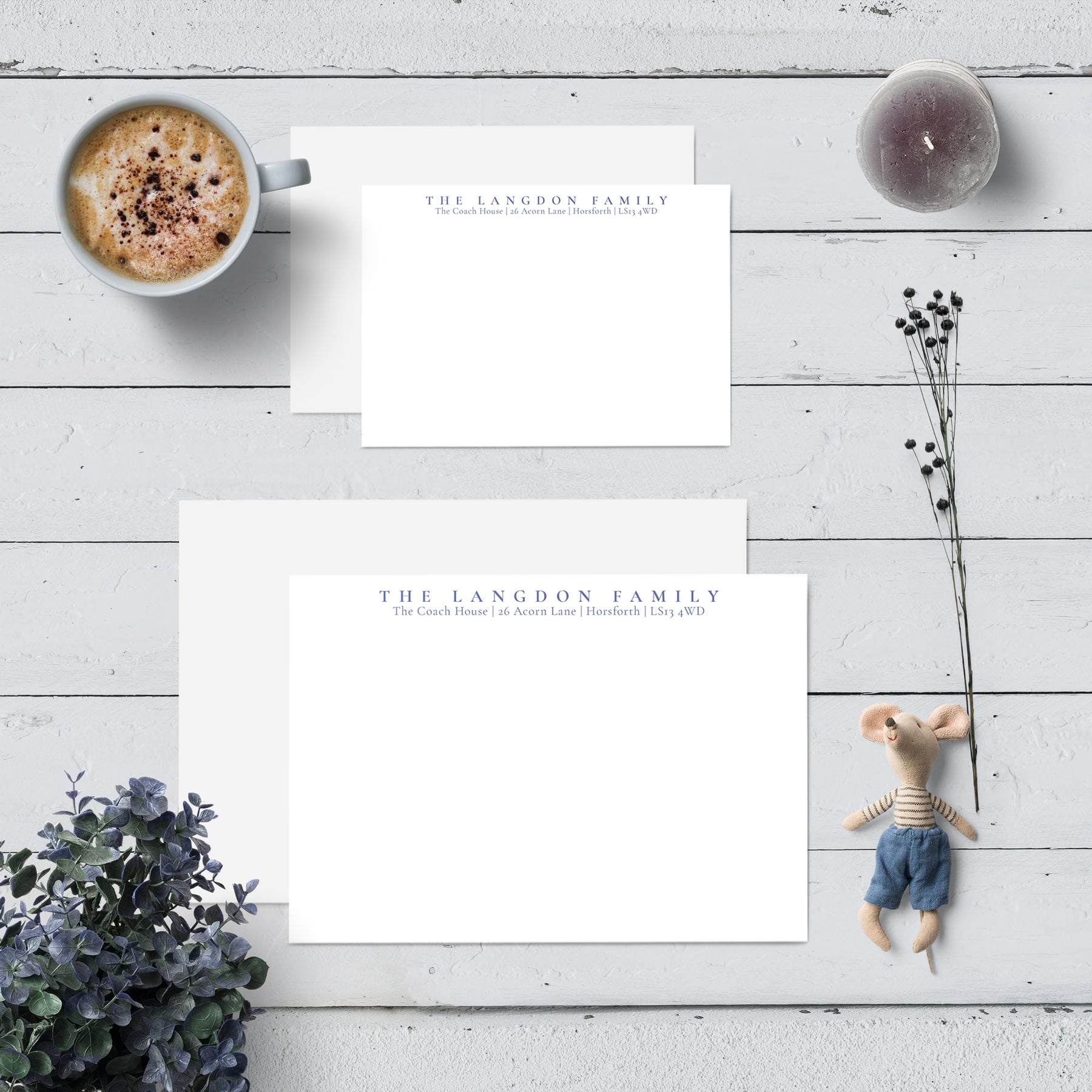
In terms of physicality, flat greeting cards are single pieces of card stock, such as a postcard, that are thick enough not to be floppy. Unlike regular greeting card prints, they are not foldable. They are generally written on one-sided, folded cards; however, they open similarly to a mini-booklet, giving more surface area and structure.
And both varieties typically include a colorful envelope (though some users get confused and believe folded cards are somehow more "official" because they open like a letter). People also tend to get mixed up by terms. Colloquially, some think of flat cards as note cards, greeting cards, etc. In the same way, a folded card can easily be thought of as a letter headed paper or a more formal invitation with a floral stationery set.
What Do People Typically Use Flat Cards For?
Flat cards are great for a quick thank-you note, quick congratulations, or straightforward acknowledgment. With a minimal design, they are a great choice for short messages. Specifically, flat thank you cards are best for weddings, clients, and following up after an interview.
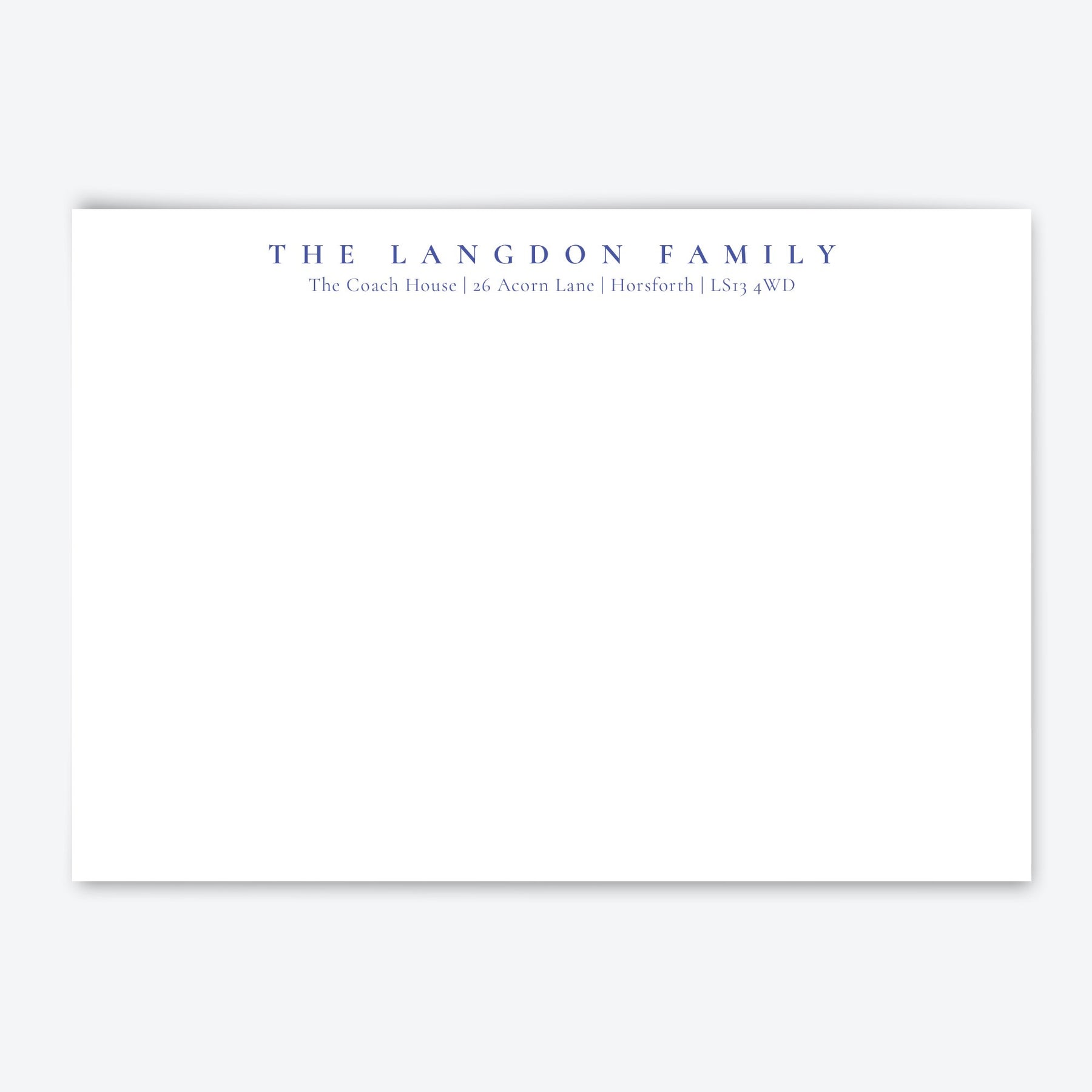
Folks who want to find printed stationery for card writing with a more contemporary style usually opt for flat cards because these give a fresh, simple look. Flat cards are great in a formal or business setting, as they are very simple and effective. They also have a clean cut design that lets branding, logos, or personal monograms stand out nicely, which is why they appeal to many professionals, entrepreneurs, etc.
What Situations Are Folded Cards Better For?
Folded greeting cards have more room to write in, and they are often preferred for writing longer personal messages. From the birthday wish to the anniversary and holiday cards, folded cards give an impression of proximity.
The floral stationery set holds a more traditional and formal connotation in the mind of many users, especially around the holidays or other sentimental times. Researchers found the treats were often saved for special occasions, like Christmas, weddings, and milestone birthdays. Unfolding a card is akin to unwrapping a tiny gift, which heightens the emotional impact of the card's message.
Which Type Feels More Personal or Thoughtful?
Folded cards will always be seen as being more genuine because they offer more length and more detail. It also provides space for handwritten ideas, sketches, or even poetry, making them ideal for deeply personal moments.
Nevertheless, lots of individuals see flat cards as a more casual and easy option, which in turn can even come across as warm and genuine, especially when combined with stunning greeting card prints or flower stationery sets. The emotion attached to the card really comes down to the reason behind the card and the message included inside.
Are Flat Cards Cheaper or More Eco-Friendly?
This is one question that puzzles many users: whether the cost of the two is different. Overall, flat cards cost less to produce because of their one-piece style. They are more eco-friendly because they use less paper and are also often less complex in terms of packaging.
For those for whom sustainability is an important factor (and who would be the first to argue against that, in any case?), flat thank you cards are likely to be a more appealing option. And because flat cards have the great added benefit of becoming less expensive the more you buy (perfect for businesses or large events)
Which Is Easier to Write On or Display?
The flat ones are just handier when you need to get going. They are made with a solid backing that makes writing easy without a hard surface, and their simple design keeps the message on course. Other users prefer flat cards for fountain pens or markers because there are no creases.
On the other hand, these cards are brilliant when displayed on shelves or mantles where they will be appreciated for their beauty. This seemingly endless ability to stand upright helps them become popular guests during the holidays while festive letter-headed paper, greetings are spread around the house.
Are Flat Cards More Popular for Business or Branding?
So, yes—flat cards are preferred for business communications. Corporate thank-you notes, branded inserts, or marketing messages, flat cards put clean design, logo placement, and beautiful typography in the spotlight.
Flat card stationery is popular among entrepreneurs and businesses alike, as it brings the best of both worlds — an efficient yet stylish approach. They are perfect to complement high-quality prints of greeting cards with colourful envelopes, creating a great first impression without being overpowering.
What Do People Ask When Deciding Between the Two?
The answer is Amazon-haul dependent, tone dependent, occasion dependent, and how many syllables in your message are dependent. Folded cards are more popular with formal events such as weddings. If you want to write short, punchy notes, flat cards are great.
Do Cultural or Regional Preferences Matter?
Absolutely. Note that etiquette related to cards and preferences will differ from region to region and culture to culture. In countries that expect folded cards for holidays or religious occasions, a minimalist flat card stationery style is welcomed even at big events.
However, due to its high prestige value, folded cards in lovely envelopes may be the best option in cultures with a fabulous presentation. On the other hand, the flat cards seem more modern or sophisticated in Western professional circles.
Which One Should You Use?
There’s no one-size-fits-all answer. When it comes to whether you should choose a flat or folded card, your decision should reflect your specific event, the tone of voice, and how you want to communicate the message you intend to send. Flat cards are super for concise, stylish messages, business purposes, and contemporary branding. However, if your tone is something more personal, a special occasion, or a bigger event, you’d want to use a folded card, as those tend to evoke words of sentimentality. Me Loovely got you covered.
We have a stationery collection that really wants to wear all the hats, you can keep both types of glue on hand! Either format could be paired with stationery for letter writing, floral sets of stationery, or colorful envelopes for a fully developed experience around sending and receiving personal notes.
FAQs
Are folded cards more traditional for weddings?
Yes, Folded Cards are what is commonly used in weddings for a more sophisticated and formal presentation.
Do flat cards look too informal?
Not necessarily. When designed thoughtfully, flat cards can be stylish, professional, and even luxurious.
Which card type is better for short messages?
Flat cards are simpler and easier to use, so they work better with short messages such as thank-you notes.
What’s the standard size for flat vs. folded cards?
Flat cards are generally between 4” x 6” and 5” x 7” in size. Folded cards are typically the same size when folded, but open to allow for twice the writing area.


